written by joseph
At CNU 20, there was a great session titled “Small is Beautiful”, named after E.F. Shumacher’s seminal book on economics. The entire panel was great, and as usual, Jim Kunstler was on fire. A lot of the discussion was depressing, but the shining light was Kinder Lanning from Local First Arizona. Do visit their site. They have some great economic data posted, but one of the coolest things Kinder showed was this incredible song Rev. G.M. Gates song “Chain Stores” that came out in 1926. This is a must see, or I guess, listen. I’ve passed it on to our very own Asheville Grown, and perhaps see a new recording out of Asheville’s great local music scene.
written by joseph
I titled today’s post for “today”. Its been a day filled with interesting activity and dynamic conversations. Atlantic Cities published an article today that goes a little deeper into the work we’ve done in Asheville and the work of Public Interest Projects, our parent company. I really enjoyed the dialog with Emily, and it was excellent to have a more mainstream conversation about the work and how its applicable across the country. Though I knew this article was going to run, I wasn’t expecting it today. With any post, the commentary provides for interesting perspective, as well as some future studies. Additionally, its neat to see where things go with pick-ups. My favorite by far, has been where Grist has gone with the Atlantic post. Its amusing what they’ve selected for the title (I don’t know what that says about their preference?). In a way, they’ve taken the bait on the message and missed the metaphor. Though, what is most important is the information is out, and more people are exposed to the information. Fun stuff.
If this didn’t make the day interesting enough, I had a spectacular conversation with Ben Schulman (CNU) and Richard Oram (Oram Foundation). Its always great to have a big picture conversation on the state of community design across the country and hear great stories of all the good work that is going on to make the world a better place.
written by joseph
Apparently the Planetizen piece has resonated with folks on the building and infrastructure side of the aisles. We’ve been getting a lot of great feedback on the article and look forward to additions to the concept. This first document is the tip of the iceberg, and you’ll note some of the deeper issues in my response on the Blog.
Do check back with us in March, as we role out the other policy issues and results from our municipal studies in the Rockies. Also, if anyone is attending the APA or CNU conferences, in April and May respectively, Joe will be presenting his findings at those conferences.
written by joseph
This article first appeared on Planetizen at www.planetizen.com. And to paraphrase from the article:
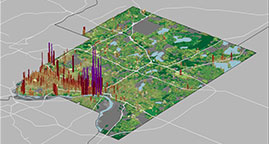
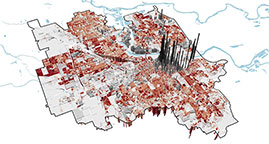
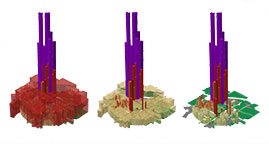
Are cities across the country acting negligently in ignoring the property tax implications of different development types? We think so, and we’ve done the math to prove it.
In this article, we do a preliminary report on the studies that we have in the hopper to date (9 are from the work with the Sonoran Institute.) Most of this report is a conversation on the structure of property taxes, though we do get into matters where policy impacts architecture. We’ll get into more detail on this in future articles. We’d be interested in your comments on this work:
written by J Patrick
Reasonable minds may differ. Our community has been fighting verbal wars over Asheville’s downtown for 25 years. “Tear it down and replace it!” — “Abandon it and forget it!” — “Too many poor people!” — “Too many rich people!” — “It’s perfect now — don’t change it!” The wars will continue because this is a passionate place, but the outcome matters to you, wherever you live.
Downtown has been the focus of Public Interest Projects since the company was started by Julian Price 15 years ago, at a time when downtown was still struggling with boarded-up storefronts and empty sidewalks. The idea wasn’t to help create an “Asheville Model” for sensible development, but that is what has happened. Price’s charge, to those of us privileged to work for him, was to invest his money in ways that make both good business sense and good community sense. We believed then — and continue to believe — that giving people the opportunity to choose density over sprawl in a vibrant, livable urban place would help address a number of community challenges: (more…)